Most entrepreneurs or creators open ChatGPT or Claude and type something like “write me a blog post about email marketing.” The reply they get is… typical. Ordinary. Forgettable. The sort of content that blends into the countless AI-generated posts already circulating online. The issue isn’t the AI itself. The real problem is that a crucial step was skipped, and that step makes all the difference.
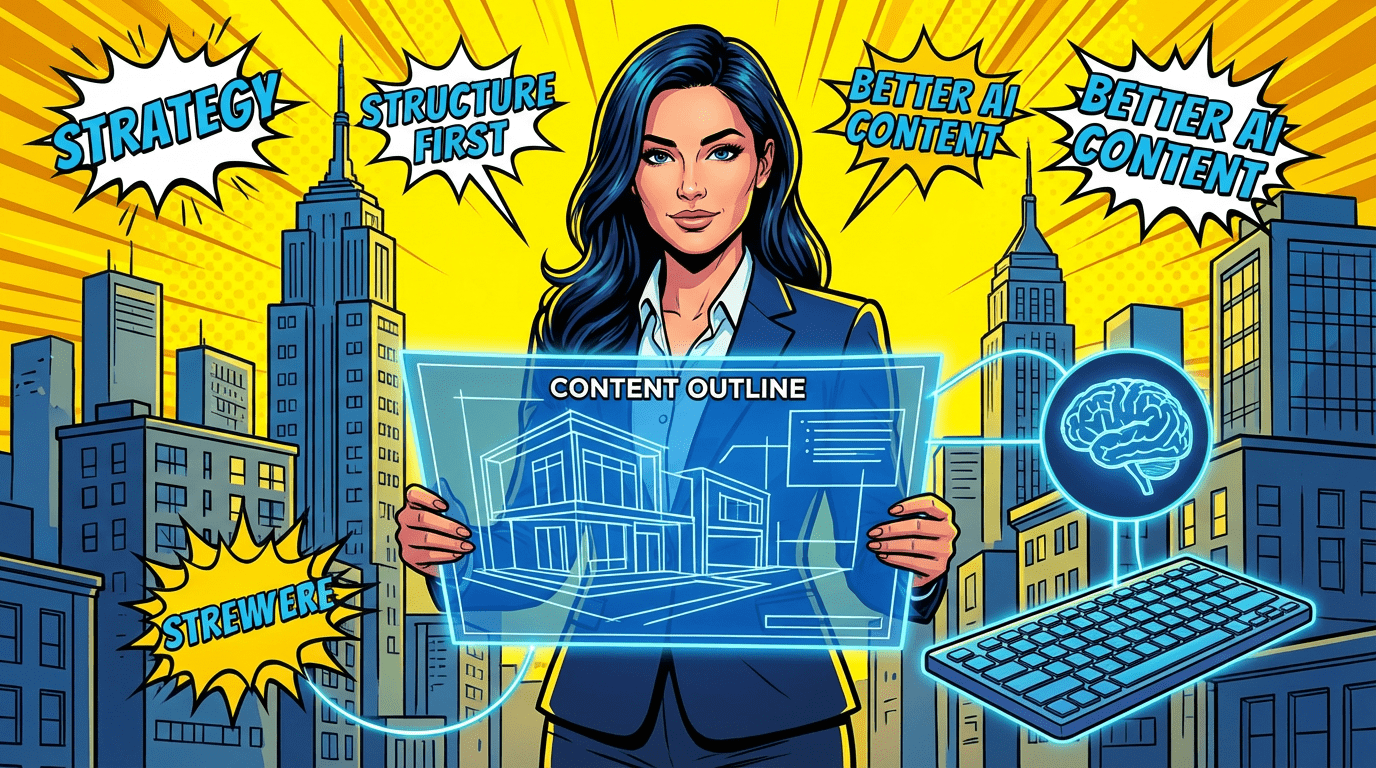
The Outline-First Strategy is straightforward. Instead of instructing AI to produce your entire piece at once, you first ask it to create the framework. You get the skeleton before adding the details. This simple adjustment gives you greater command over the final result, and it reduces your editing time because the content flows more naturally and aligns with your vision.
Imagine constructing a house. No one just starts nailing planks together and hopes it becomes a home. First, there’s a blueprint. An outline acts as your content blueprint. When you allow AI to help you craft that blueprint before generating any paragraphs, the quality of the content significantly improves.
How It Works Step-by-Step
The process is divided into two distinct phases. The first phase involves requesting an outline. The second is building each section individually. Never skip the first phase, and avoid combining both into a single prompt. Keeping these steps separate is what makes this method effective.
In phase one, you provide AI with your topic, target audience, and the unique angle you’re taking. You ask it to produce only an outline with a working title, main headings, and brief notes about what each part should cover. No actual writing—just the roadmap.
After receiving that outline, review it. You might reorder sections, remove one that seems weak, add new ideas the AI missed, or refine your angle.
All of this takes about two minutes and prevents the frustration of reading through 1,500 words of AI content only to realize it’s missing the mark.
Next, in phase two, you feed the approved outline back to AI and ask it to generate each section. You can do this one at a time for maximum control or all at once if the outline is comprehensive. Either way, the AI now has a clear guide, resulting in content that’s organized, logical, and aligned with your original vision.
PROMPT:
I need an outline for a blog post. Here are the details: Topic: [YOUR TOPIC] Target audience: [WHO THIS IS FOR] Angle/unique perspective: [WHAT MAKES YOUR TAKE DIFFERENT] Desired length: [WORD COUNT] Goal of the post: [WHAT YOU WANT THE READER TO DO AFTER READING] Please create a detailed outline that includes: – A working title – An opening hook concept (one sentence describing how the post should start) – 4-6 main sections with descriptive subheadings – 2-3 bullet points under each section noting what to cover – A closing section that ties back to [YOUR CTA OR GOAL] Do not write the actual content yet. Just the structural outline.
This final instruction is crucial. Without it, AI might skip the outline phase and jump straight into writing the full article. You must be explicit about requesting only the structure.
Applying This Technique in Your Marketing
Suppose you manage a niche site about email marketing geared towards course creators. You want to craft a post about welcome sequences. Here’s how you’d modify the prompt:
PROMPT:
I need an outline for a blog post. Here are the details: Topic: Welcome email sequences for online course creators Target audience: Course creators with existing email lists but no automated welcome sequence Angle/unique perspective: Many welcome sequences feel too formal and disconnected for creators who build their brand on personality Desired length: 1,200-1,500 words Goal of the post: Encourage readers to download my free welcome sequence template Please create a detailed outline that includes: – A working title – An opening hook concept (one sentence describing how the post should start) – 4-6 main sections with descriptive subheadings – 2-3 bullet points under each section noting what to cover – A closing section that prompts downloading the free template Do not write the actual content yet. Just the outline.
The AI response will likely be something like a title such as “Your Welcome Sequence is Dead in the Water (Here’s How to Fix It),” followed by sections analyzing common problems, showcasing personality-driven emails, detailing key emails to include, and wrapping up with a call-to-action for your template. Each will have notes about what to include.
This allows you to review and adjust—maybe swap section order, add or remove parts, or refine the title—before writing a single word of the post. These are easy improvements at this stage, much harder afterward.
Once the outline is approved, you proceed to phase two by instructing AI: “Now generate the full blog post based on this approved outline. Keep it conversational and include examples relevant to course creators. Each section should be around 200-300 words.” The results will be a cohesive, well-structured post following your plan.
Scaling the Strategy Everywhere
This method isn’t limited to blog posts. Need a lead magnet? Outline first. Creating a sales page? Outline first. Developing a five-day email sequence? Outline first. The core idea remains the same: structure before content. Blueprint before execution.
You can even batch your outlines—spend twenty minutes drafting outlines for five different pieces. Review and tweak them collectively. Then have AI generate each piece based on these approved frameworks. It’s faster than doing one at a time and keeps your content consistent.
Another tip: save your best outlines as templates. If a certain structure works well for a monthly roundup or a specific post, store it. Next time, reuse it by swapping in new data but keeping the proven format. AI can also turn a one-time outline into a reusable template if you ask it to strip away specific details.
Be cautious: AI-generated outlines can sometimes be too predictable. If every section has exactly three bullet points following the same pattern, it’s AI being formulaic. Push for variation—real content has uneven detail, and your outline should reflect that.
The Outline-First Strategy might not seem flashy, but it’s the most dependable way to improve AI content quality. Many seasoned creators rely on this method—those who skip it often find themselves frustrated with the results.
Pro tip: Store your top-performing outlines in a swipe file. When creating similar content later, give AI a past outline and ask it to adapt the structure for new topics. This consistency helps keep your brand messaging aligned without sounding repetitive.